People were rushing into the city. We didn’t know why. We were visitors to Oxford, strolling like tourists, enjoying the cobbled streets and history-soaked corners. But as we moved toward the centre, the mood shifted. Crowds pressed in, voices rose, signs waved high. On one side of the road, people shouted for compassion, calling for …

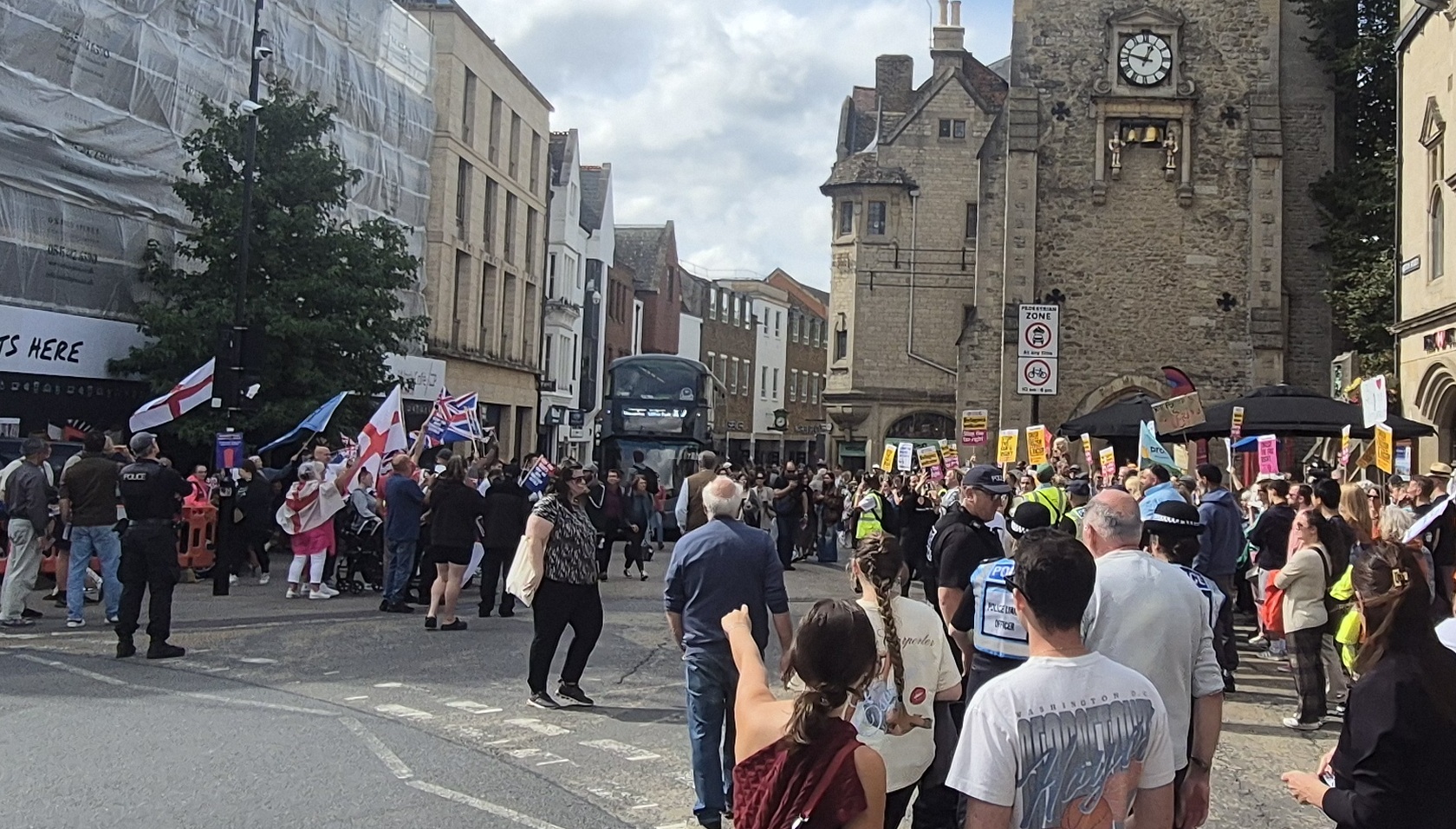
People were rushing into the city. We didn’t know why. We were visitors to Oxford, strolling like tourists, enjoying the cobbled streets and history-soaked corners. But as we moved toward the centre, the mood shifted. Crowds pressed in, voices rose, signs waved high.
On one side of the road, people shouted for compassion, calling for refugees to be welcomed. On the other side, the chants were different, demands to close borders, to shut people out. Caught in the middle, I noticed a small table almost hidden behind the commotion, a handful of people trying to share their pro-Palestine message. On the other corner, police stood with watchful eyes.
The noise escalated. It seemed that every voice was desperate to be heard, yet no one was listening.
On that day, it remained just a clash of voices. However, around the world, many protests have erupted into something more dangerous. Different sides dig in, anger sharpens, and hate becomes louder than humanity.
And I found myself asking: Is this what peace looks like?
Peace is More Than the Absence of War
Peace is often thought of as the silence that follows when guns stop firing. However, true peace is active. It’s the presence of understanding, compassion, and the willingness to see the humanity in the other.
Raising our voices may win us attention, but it rarely wins hearts. Shouting across a barrier doesn’t create connection; it hardens division. Too often, we confuse “being heard” with “creating change.” Real change comes when people listen, not when they shout louder.
Where Peace Begins
When I think of peace, I don’t picture a parliament or a police barricade. I picture two people at a table, steaming cups in their hands, a piece of chocolate between them. I picture conversation that begins not with, “Here’s what I believe,” but with, “Tell me your story.”
Because peace doesn’t begin with nations. It doesn’t even begin with crowds. It begins with individuals choosing connection over conflict.
When we take the time to sit with someone we disagree with, or perhaps someone we don’t understand at all, we discover something remarkable. We find that beneath the labels and opinions, we share a heartbeat of humanity. We may never agree on politics, policy, or protest, but we can look each other in the eye and see a person, not an enemy.
Chocolate and Coffee as a Language of Peace
For me, that’s what Chocolate and Coffee Breaks are about. They are not about the drink or the or what we eat, they are about the ritual. A pause. A gesture of welcome. A moment where two people share something simple and discover something profound.
These everyday rituals can break down the barriers that shouting builds up. A piece of chocolate becomes a symbol of generosity. A shared cuppa becomes an act of listening. And in those small gestures, peace finds a foothold.
We cannot expect governments and leaders to solve the world’s divisions if we are unwilling to solve them in our own streets, families, and communities. The responsibility for peace belongs to each of us. And the tools are simpler than we think: presence, compassion, conversation.
A Challenge for International Day of Peace
So here is my invitation: today, don’t raise your voice. Lower it. Don’t prepare your next argument. Prepare your next question. Find someone whose story you don’t yet know, and listen.
Peace will not come from protests alone. It will come from people willing to sit together in the quiet, share chocolate and coffee, and let love be the loudest voice.
✨ What if today, instead of shouting across the street, you sat across the table?
Get in Touch with Us
We’d love to hear from you—share your thoughts or ask a question!